
When making genuine leather wallets through wallet OEM manufacturing, many businesses overlook the “thickness of the leather”. This technical parameter, in fact, is important. A difference of 0.2 mm can change the product life by 2 years. It directly leads to customer satisfaction. But many businesses leave it to their suppliers. In some cases, 30% of the first production was returned as a result of not being able to choose the right thickness. That’s not a small number. In this article, we will show you the best leather wallet thickness for each type of wallet in numbers. We will also explain how to choose genuine leather thickness based on durability test data. Here are the specific items to write in the OEM specification. Include practical strategies for balancing cost and quality. We have covered everything you need to know before placing an order. If you read this, you can take the initiative in negotiations with leather suppliers. The risk of product defects can also be greatly reduced.
Why “leather thickness” affects product quality in a genuine leather wallet OEM
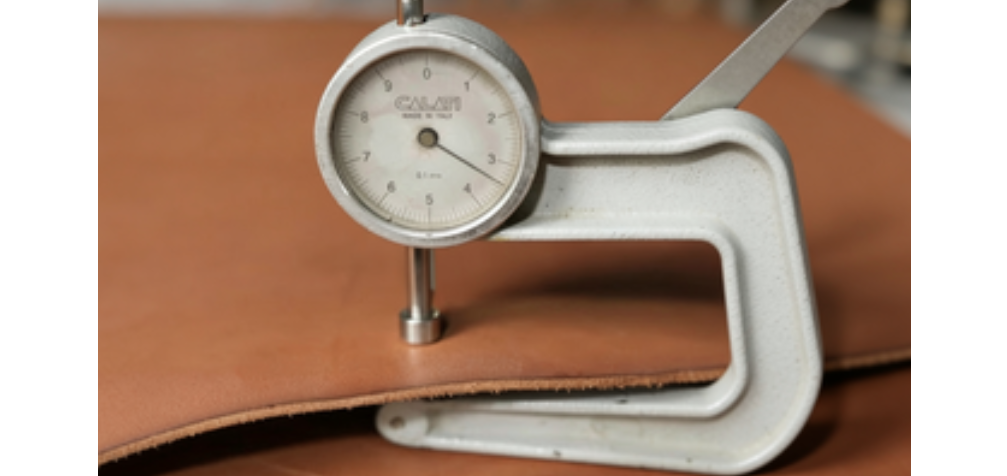
Leather wallet thickness is the most important parameter that determines the “life” of a wallet. In numerical terms, the impact is clear.
0.7 mm is the critical point of strength. According to tanners’ practical data, below this figure, the strength of the leather drops to an extreme. Loosening from the bent part, premature tearing of the card pocket, and collapse of the gusset shape occur.
0.8mm is the lower practical limit for edge polishing and kerf finishing. If it is less than 0.8mm, even strong leather will be prone to wrinkling. Luxury finishing becomes physically difficult.
Thick is not good. The silver surface layer is up to about 1.5 mm. Beyond that, it will be a floor layer. Thickening more than 1.5mm does not increase durability.
Three specific effects of thickness on usability
The risk is serious if it is too thin (less than 0.7-0.8mm). The bending part is loose and cannot maintain the gusset shape. Stretching and tearing occur early from the card insertion and insertion part. It is directly related to customer complaints.
1.0 to 1.5 mm is the best range for interior decoration. When used for card shelves and dividers, the thickness of the fold is within the acceptable range. It is less out of shape and the card is easy to put in and take out.
If you set the exterior at 2.0-3.0mm or more, you will have a problem. The storage of the inner pocket of the suit will deteriorate. The tension of the bending part increases. The load on the stitches and adhesives increases. The risk of cracking and peeling increases with long-term use.
Where the gusset and card parts overlap, the total thickness increases by nearly 1.5 to 2 times. This leads to a fatal defect that makes it difficult for the fastener to close.
Selection criteria for optimal thickness of long wallet OEM
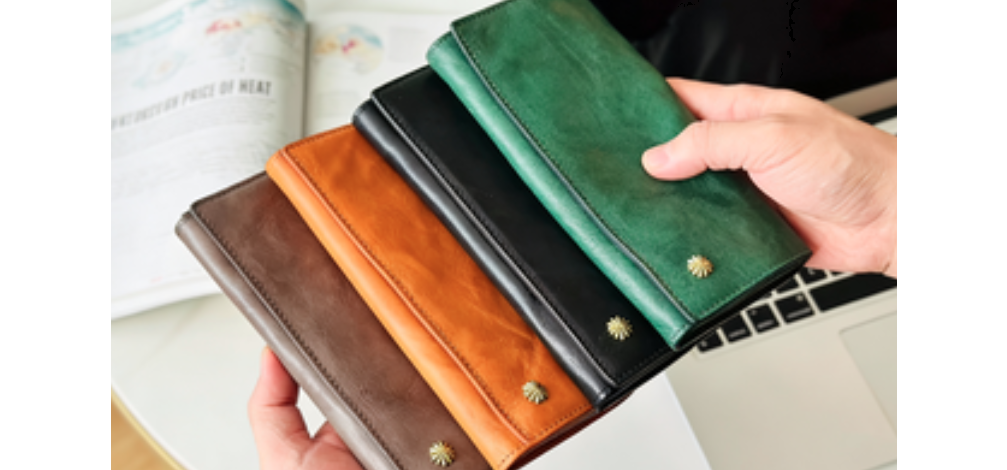
The recommended range for the exterior of a long wallet is 2.0 to 3.0 mm. Practical data from the industry supports this figure. In many cases, the standard for leather craft patterns is 2.0 mm for the exterior and 1.0 mm for the interior.
Professional craftsmen design the exterior at around 1.8-2.0mm. The card part is thinner to 0.7mm. Adjust in 0.1mm increments. The 2.0-3.0mm zone can create a “normal to slightly firm” wall thickness. It is a practical range.
3.0mm or more is a different position. It is for products that promote “overwhelming heaviness” and “high leather durability“. It can create a higher level of weight and thickness than regular products. However, it will be difficult to fit in the inner pocket of the suit.
Practical comparison of interior thickness range 0.8 to 1.5 mm
If you use 1.5mm for the interior, you will have problems. If you calculate with a long wallet with a round zipper, you need more than 20mm of leather lamination alone. It greatly exceeds the actual thickness. It becomes a “long wallet that is too thick” and loses its marketability.
It is serious if the gusset part is 1.5mm thick. It will be difficult to get into the habit of folding. It is not recommended in practice due to its thick finish.
Let’s look at the trial calculation with an interior of 1.0mm. Assuming a card thickness of 1.0mm, the required space due to the thickness of the leather is about 14mm. Assuming a total of 20mm, the remaining space is only 6mm. One card consumes 4mm × 1mm. There is only about 2mm of room for bills and coins. It is evaluated as “a little cramped”.
It is clear when you look at the actual production example. Three types of round zipper long wallets are used for the interior: 0.4mm, 0.5mm, and 0.8mm. Anything above 1.0mm is not used for interior decoration.
The manufacturer’s rule of thumb is that leather thickness is over 1.0mm = thick for interior decoration. The thinnest practical guideline for one piece of leather for accessory interiors is 0.8mm.
Bi-fold wallet OEM thickness design know-how
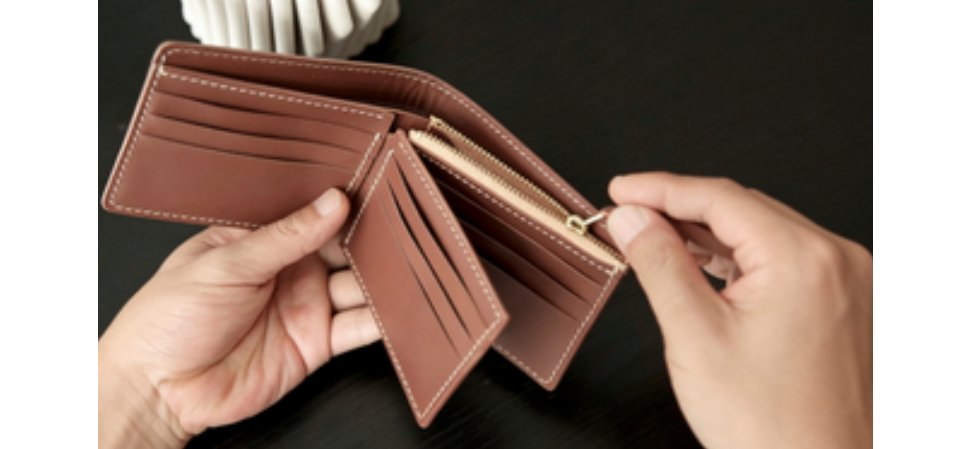
The practical standard range for the exterior of a bi-fold wallet is 1.2-1.5mm. It will be thinner than the 2.0-3.0mm of a long wallet.
The reason is the difference in structure. On average, a bi-fold wallet consists of about 12 parts. Each part is laminated. If the exterior is too thick, the total thickness will exceed the acceptable range.
Dimensional differences and strainer thickness errors occur in increments of 0.1 mm. This small error is stacked up by 12 parts. The total thickness of the finished product will increase more than expected. If the exterior is kept to about 1.2 to 1.5 mm, it is possible to ensure a safe zone in mass production.
The sewing range of flat sewing machines is also a limiting factor. The basic range of leather thickness for stable sewing is 0.6 to 1.2 mm. The finish with double-sided gluing and core material is about 1.5 to 2.0 mm. The exterior 1.2 to 1.5 mm is the easiest to adjust.
When the total thickness exceeds 6-8 mm, the flat sewing machine reaches its limit. It is necessary to design the fold and the part where the card layer overlaps to around 6mm. It is reasonable to keep the exterior to 1.2-1.5 mm.
The card stage and pocket are 0.8 to 1.2 mm to avoid the risk of needle breakage.
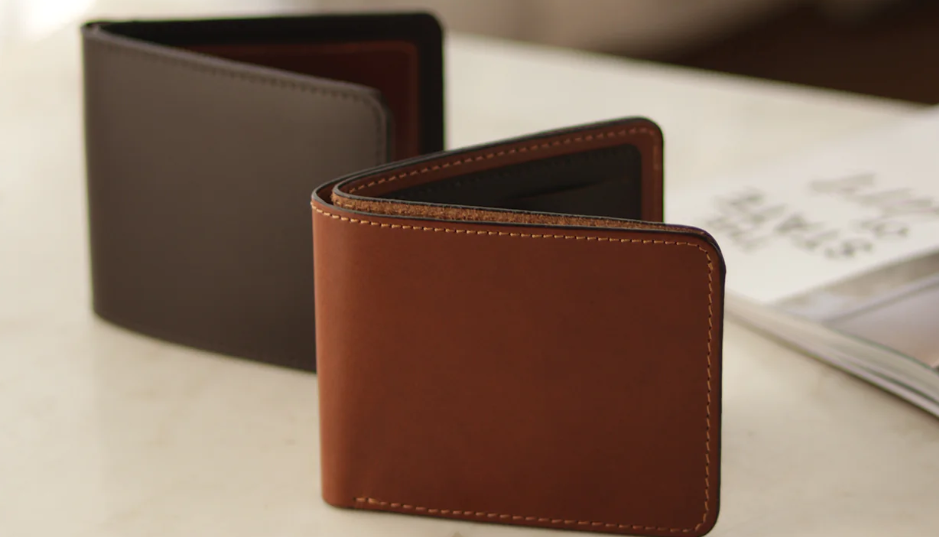
Select 0.8 to 1.2 mm for the card stage and pocket. This is because the range of a flat sewing machine is 0.6 to 1.2 mm. Within this range, you can reduce the risk of needle breakage and eye skipping.
In areas with a lot of overlap, such as four-tier cards, “ultra-thin” straining is important. In practice, it is dropped to around 0.8 to 1.0 mm. It is easier to reduce the total thickness of the overlap.
The difference is clear in numbers. Suppose a case where 4 to 6 card tiers overlap.
For 1.2mm:
1.2mm × 4 pieces = 4.8mm
If you add the outer, leather, and core, there is a risk of more than 6mm. Approaching the limits of flat sewing machines.
For 0.8 to 1.0 mm:
0.9 mm × 4 pieces = about 3.6 mm Even if you add
the exterior + core, it is easy to fit within 6 to 8 mm. The incidence of sewing problems is reduced.
You should also consider the stiffness when inserting and removing the card. If you drop it to less than 0.6 mm, the waist will be insufficient. It will make it difficult for the card to get caught. If it is 1.3mm or more, the thickness will be excessive at the overlapping area. The practical reasonable range is 0.8-1.2 mm.
Thinning of the bending part improves the usability
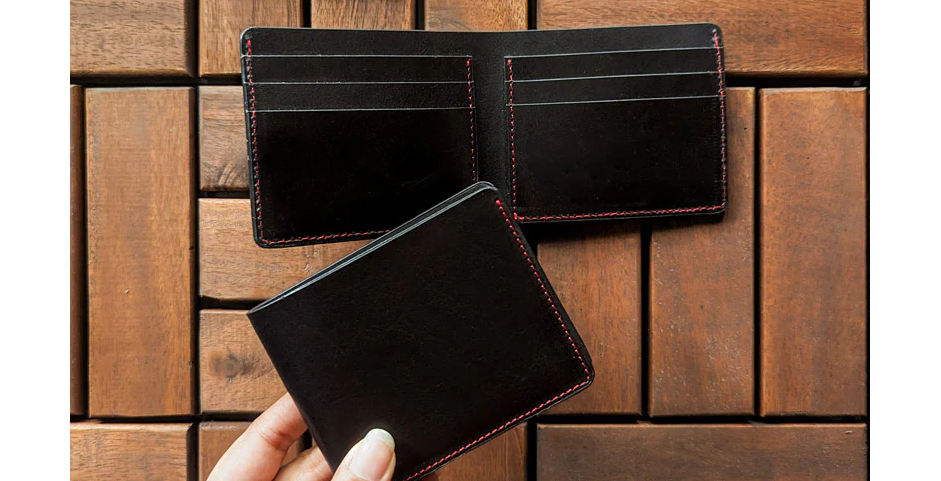
Stepping is essential for the bending part. Strain down to 0.6mm, which is the thinnest range for flat sewing machines. It strikes a balance between “ease of bending” and “sewing stability”.
The recommended straining thickness for the helicopter return part is 0.3 to 0.4 mm. Combine with a core thickness of about 1 mm. The finished thickness of the fold can be reduced by about 0.3 to 0.4 mm of leather + 1 mm of core. The folding habit will be natural.
If you leave the bend unfiltered at 1.0 to 1.2 mm, the problem will occur. It has a high initial rigidity and is easy to get into the habit of opening. Concentrated stress is applied to the folds. Increases the chance of cracking.
There is data that if the thickness is reduced by 20% by helicopter straining, the limit thickness for hand sewing can be increased by about +2mm. If you want to use thick leather, it is adjustable with this technique.
The precision of the step-straining determines the quality of genuine leather. When placing a wallet OEM order, you should also check the technical level of the straining process. In factories that do not have the ability to adjust in 0.1 mm increments, the finish of the bending part will vary.
Optimizing the thickness of coin purses and compact wallets
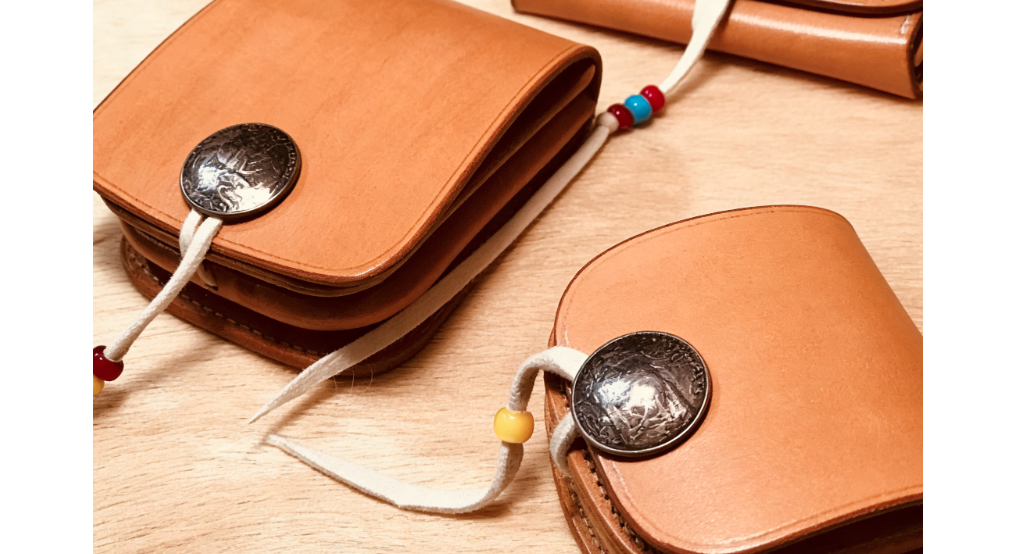
The total thickness of compact wallets is 15 mm (1.5 cm) or less, which is the practical standard in the market. Actual measurement data supports this figure.
The “slim2” model (92×92mm) maintains a thickness of 15mm with the contents inside. It can hold 7 cards + 11 bills + 15 coins. Another model has a thickness of 18mm and has a compact reputation.
Cashless card-sized wallets are even stricter standards. It holds 5 cards + 5 bills + 15 coins with a thickness of about 10 mm (1 cm). In some cases, ultra-thin long wallets can achieve about 7 mm with 10 bills + 6 cards.
The amount of coins is less than 15 coins, which is a design guideline for thickness management.
In the design of a minimalist wallet, 10-15 coins are set as a “range that does not affect the thickness”. This number of sheets will fit within 15mm of total thickness.
“slim2” also achieves a total thickness of 15mm with 15 coins. The card-sized wallet also has 15 coins + 1 cm thick. This is evidence that this figure has become an established industry standard.
It is assumed that you do not put too much change. If you put more than 20 sheets, the total thickness will increase by 2-3 mm. Compact performance is compromised.
Four structural design techniques for total thickness control.
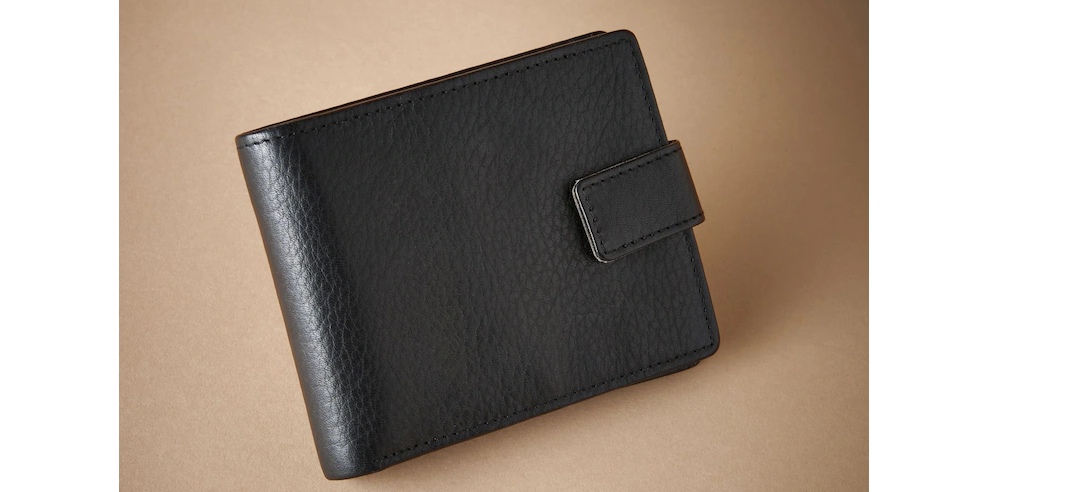
The first technique is a shallow bottom + wide opening coin purse structure. Reduces depth and prevents thickness increase. Overlap can also be reduced.
Optimizing stack placement is the second method. Place the coin purse at the top. Place the card holder below it and the bill compartment in the front. It is a configuration that minimizes steps and overlaps.
The L-shaped fastener design is the third point. While opening wide, only the minimum margin is secured to prevent bills from getting stuck. Make the corners round to reduce unnecessary margins. It can maintain a total thickness of 15 mm while ensuring opening.
The fan-shaped folding holder of the card is the fourth technique. Reduce the number of layers and let them escape in the direction of the area. It has the effect of reducing local thickness.
The ultra-thin long wallet (approx. 7mm) has “two special structures” that hold 10 bills + 6 cards. The key is to reduce overlapping storage areas and concentrate on one side.
Summary
How to choose the thickness of leather for genuine leather wallet OEM?
The answer will depend on your business goals. The standard values are as follows:
– Long wallet: 1.2-1.5mm
– Bi-fold wallet: 1.0-1.2mm
– Compact wallet: 0.8-1.0mm
Let’s abandon the idea that “thicker is better.” A difference of just 0.2 mm can significantly affect the usability of a wallet for women, especially in terms of slimness, flexibility, and comfort. Production costs will also change accordingly. Choosing the optimal leather thickness ensures both durability and customer satisfaction in women’s wallet OEM manufacturing.
Start with the right thickness selection. It’s the first step to the success of your leather wallet OEM project.
Recent Comments