
The moment the bag arrives, the bottom is already warped—such complaints frequently occur at OEM order sites. The cause of bag shape deformation is often not the material or the sewing. The fundamental problem lies in insufficient specifications during the design phase of bottom reinforcement.
In OEM shoulder bag manufacturing, the bottom is the area where load and friction are most concentrated. Nevertheless, there are many cases where the reinforcement method is not clearly specified in the order specifications.
In this article, we will compare the main construction methods related to bag bottom reinforcement from a technical perspective. The four methods covered are as follows.
-
Board insertion
-
sewing reinforcement
-
base rivet
We provide practical knowledge to help OEM ordering staff and brand owners avoid confusion when specifying specifications.
Durability of the Bottom in Shoulder Bag OEM | The Root Cause of Shape Deformation
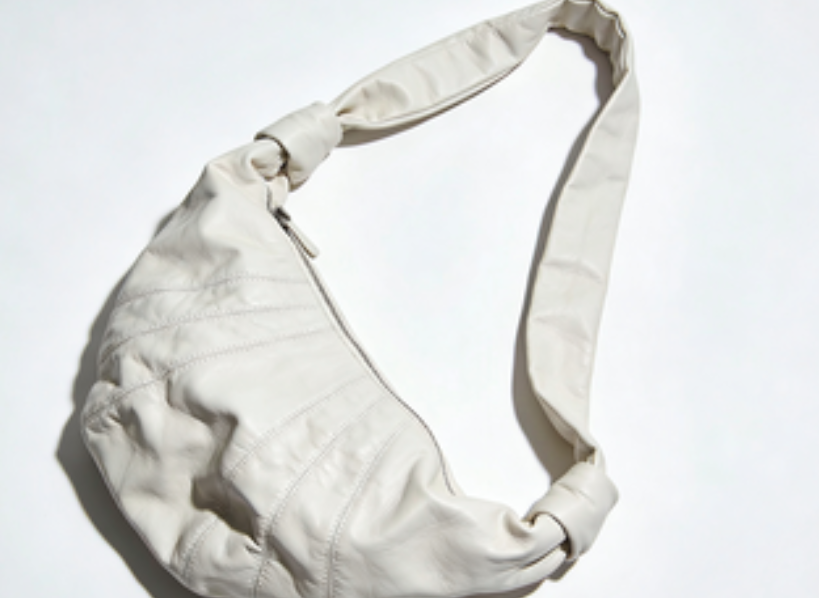
Deformation of the bottom of a bag is not caused solely by how it is used. In fact, there are structural points that tend to be under stress. When you put a PC or a book inside, the weight is not evenly distributed across the entire bottom; much of it (about 80–90%) is concentrated in the four corners. As a result, the same area continues to bear the burden, and before you know it, the shape gradually deteriorates.
■ Three factors that cause bottom surface deterioration
Bottom damage mainly progresses when the following three act simultaneously.
(1) Compression deformation due to weight: When multiple
books are put in, a slight sinking (about 2–3mm) occurs on the bottom.
Furthermore, when carrying a PC daily, the wear on the bottom is said to accelerate by about 15–20% per month.
(2) Accumulation of friction with the floor: Every
time you place the bag on the floor, sand and dust accumulate.
This increases friction, raising the coefficient of friction by about 0.3 to 0.5.
Waterproof coatings also degrade about 30% in 3 to 6 months, after which the material itself suffers direct damage.
(3) Load from Walking Vibrations (about 2–4Hz) repeatedly transmitted to the bottom surface while
walking, amplifying damage.
This vibration can increase the load on the bottom surface by about 1.5 times.
Furthermore, depending on the strap angle (45–60 degrees), pressure from the sides is transmitted to the bottom, accelerating deformation by 1.2 to 1.8 times.
■ Risks of continuing to use without reinforcement
Using the device without reinforcement under these conditions can easily lead to the following problems:
-
The probability of scratches on the bottom surface is 40% over about one year.
-
About 25% of bag repairs are related to deformation issues.
-
Durability varies by material, and generally, polyester tends to be less durable than nylon
Additionally, for bags with flap-shaped structures, if the internal core material deteriorates, the support capacity of the bottom can drop by up to 50%.
Contact with the metal hardware may cause scratches of about 0.5 to 1 mm.
Shoulder Bag OEM Bottom Reinforcement Plate Construction Method | Comparison of Shape Stability by Material
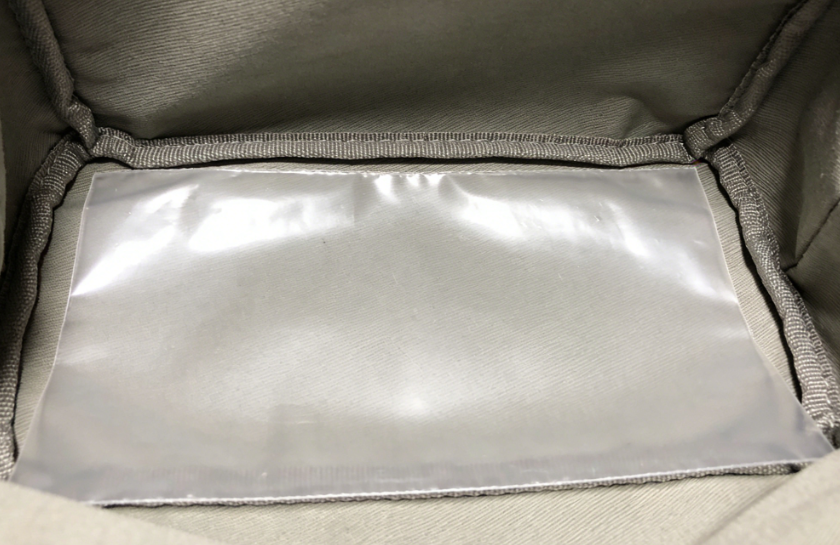
The choice of material for the bottom reinforcement plate greatly affects the finished quality of the bag. Even though the ‘board insertion’ method is the same, plastic, plywood, and aluminum each differ in shape stability, weight, and durability. Simply writing “with bottom plate” on the OEM bag specification sheet is not enough. Specifying the material is the first step to preventing quality complaints.
Plastic Sheet | Lightweight, low-cost general-purpose material
Plastic (mainly PP and PE) is the most commonly used material among bottom reinforcements.
Advantages
– High water resistance, easy to use in rainy and outdoor
weather – lightweight and easy to process. Low die-cutting
cost – rigidity can be adjusted by changing the thickness (1.5–3mm)
Disadvantages
– Fatigue deformation is likely to occur under repeated
loads – Warping may occur in high-temperature environments
– If too thin, shape retention decreases
Recommended use: Mid-priced bag for commuting and everyday use. Pairs well with nylon and polyester materials
Plywood | Balanced rigidity and workability
Among wood-based materials, plywood is characterized by its ability to balance thinness and strength.
Advantages
– High compressive strength and resistance to deformation even when heavy
items are loaded – easily integrates with the sewing machine during sewing. Internal “shifting” is also less
likely – natural material, making it a great match for leather bags and luxury brands
Disadvantages
– Low moisture absorption and water resistance. Swelling and reduced strength occur in wet
environments – Tends to be heavier than
plastic – Edges are prone to cracking or chipping during manufacturing. Handle with care
Recommended uses: Leather bags – OEMs seeking brand quality. Products designed for use in indoor and dry environments
OEM Sewing Reinforcement Methods for Shoulder Bags | Types and Strength Comparison
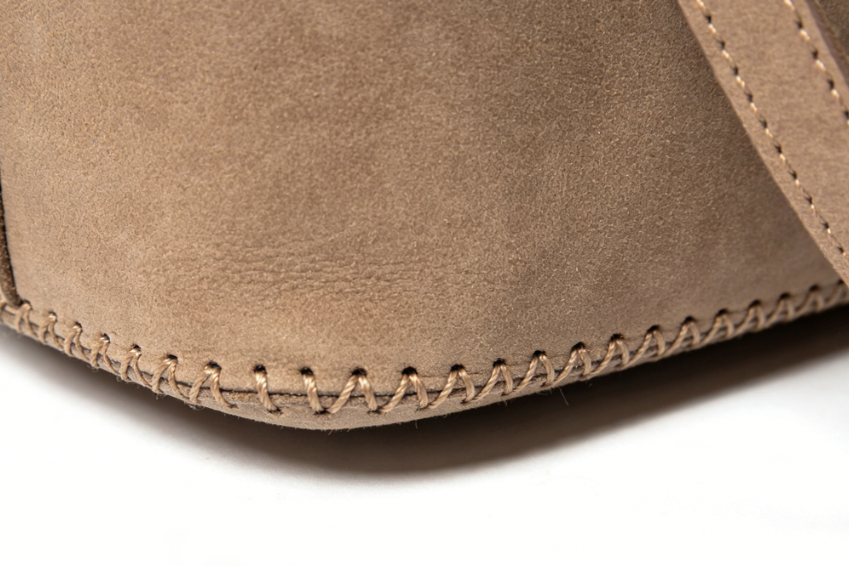
Even if the bottom reinforcement board material is good, if the stitching method is not right, it will not be effective. In bottom reinforcement, sewing is not just about fixing the body; it is a crucial factor that determines the strength itself. There are three main main construction methods. One method involves wrapping fabric to integrate the body, reinforcing from the inside with tape, and sewing it into a bag shape. Since each has a different structure, durability, cost, and appearance also vary.
Integrated Fabric Wrap Sewing | Highly Reliable as OEM Quality Standard
This method involves wrapping the bottom reinforcement plate with fabric and sewing it from the outside using a sewing machine.
Advantages
– The reinforcement plate does not shift internally. Shape remains stable even under load
– The sewing line also serves as reinforcement, increasing overall bottom rigidity
– Delivers finished quality suitable for leather bags and high-priced OEM products
Disadvantages
– Many steps. Quality can vary greatly depending on the craftsman’s
skill – when using laminated fabric, auxiliary materials such as Teflon pressers or Hatron paper
may be necessary – Small-lot OEM of shoulder bags tends to increase costs
Recommended uses: Leather bags, OEMs that prioritize brand quality, and projects where durability needs to be clearly stated in the specification sheet
Hidden Tape Type | Finish-focused method that reinforces from the inside
This is a sewing method where reinforcing tape is attached to the lining side. Since the seams are not visible from the outside, the biggest feature is that it does not compromise on design.
Advantages – No stitching marks appear on the exterior. Suitable for bags with simple
designs – the process is straightforward and easy to integrate into mass production lines
Disadvantages
– The adhesive strength of the tape tends to be a weakness of
the method – Compared to integrated fabric wrapping sewing, the effect of improving bottom rigidity is lower
– There is a risk of tape peeling off with long-term use. Selecting materials and adhesives becomes important.
Recommended use: Mid-priced nylon and polyester bags, OEM projects prioritizing design
Bag stitching | Structural reinforcement that encloses the seam line
This method involves folding the edges of the fabric inward and sewing them together without exposing the sewing line outside.
Advantages
– No visible seams make it resistant to fraying and abrasion
– Integrated edge treatment on the bottom ensures both appearance and durability
Disadvantages
– High precision requirements for the process. Sewing misalignment makes corrections difficult
– may not be suitable for combinations with thick or hard core materials
Recommended uses: casual bags made from lightweight materials, OEM products that want a clean finish
Comparison of Sewing Methods | Criteria for Determining OEM Specification Specifications
|
construction method |
Bottom rigidity |
Exterior finish |
Cost |
Recommended Materials |
|---|---|---|---|---|
|
Integrated fabric wrapping sewing |
high |
Luxurious feel |
Junior High to High School |
Leather & Thick Fabric |
|
Hidden tape type |
middle |
Clean exterior |
middle |
Nylon and polyester |
|
bag sewing |
Junior High to High School |
No sewing |
middle |
Lightweight, medium-thick fabric |
Please specify in the OEM specification as much as “Bag sewing reinforcement method: XX method, Tape/core material used: XX.” If the specified construction method is vaguely specified, there is a risk that the manufacturer will switch to a cost-priority simplified construction method. To prevent quality complaints, it is necessary to clearly state the sewing specifications.
Shoulder Bag OEM Bottom Stud Method | Five Pieces Arranged to Prevent Deformation
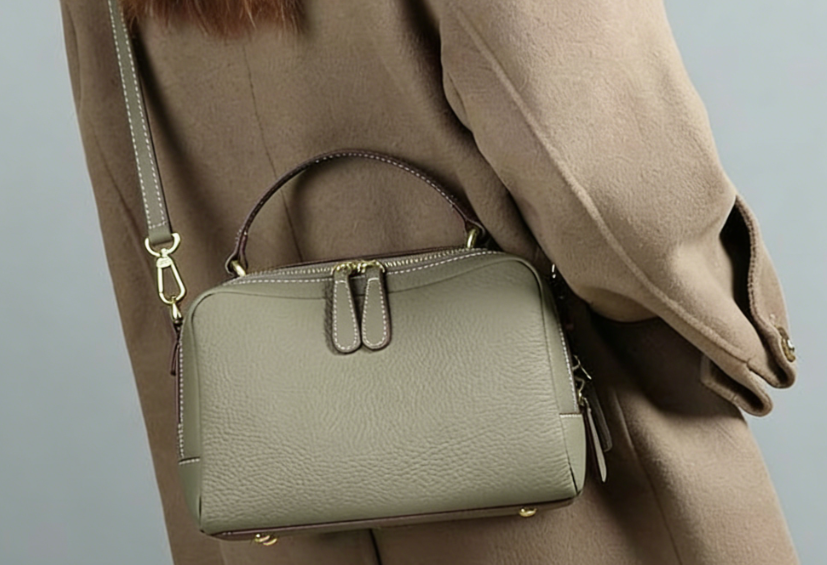
Bottom studs are not just for appearance. Depending on the placement, it can help suppress deformation of the bottom. The four-point arrangement at only the four corners cannot support the center, so when the load is concentrated, the center tends to sink. When you put a PC or documents inside, this deformation causes the shape to deform. On the other hand, with a five-point arrangement including the center, it directly supports the concentration of load, which can reduce deformation by about 30–40%.
■ Layout Guidelines
-
Four corners: 10–20mm inside the corners
-
Center: Center of the bottom
* For bottoms 300×200mm or more, 5-point arrangement is effective. Small sizes can be used with 4 pieces.
Material Selection and Impact on Durability
The material of the bottom studs affects both functionality and cost.
|
Material |
abrasion resistance |
Corrosion risk |
Recommended Uses |
|---|---|---|---|
|
Brass (solid wood) |
Medium (HB80–100) |
low |
Luxury leather goods |
|
Stainless Steel (SUS304) |
High (HB150–200) |
extremely low |
Outdoor & Practical Items |
|
Brass plating (zinc alloy) |
Low to Medium |
Inner (after plating removal) |
Fashion-oriented, cost-focused |
Be careful with the plating thickness of brass-plated products. Typical thin plating of 5–20μm exposes the base after 100–300 hours of wear. If material specifications are omitted out of cost priority, it can lead to appearance complaints. Please be sure to specify the material in the specification sheet.
Conclusion
Reinforcing the bottom of the bag is not a “precautionary step.” These are core specifications that determine the quality and lifespan of shoulder bags, and should be incorporated from the design stage.
Material selection for reinforcement plates, combination of sewing techniques, and design of bottom studs — all of these are clearly described in the OEM specifications. This alone greatly reduces the risk of claims after manufacturing. Conversely, ordering bags with vague specifications is the main cause of bag deformation.
The brand’s trust is built on the durability of its details.
At sunteamOEM, dedicated personnel support you from bottom reinforcement specification design to integrated OEM bag quality control. Even if you are still unsure which method suits your products, please feel free to consult with us.
Recent Comments