
That “Genuine Leather” tag on your new handbag might be telling you less than you think—in fact, it’s often the lowest grade of real leather on the market, just one notch above pure plastic. Glossy showroom lighting and confident sales pitches can make it hard to spot the difference between full grain leather and genuine leather, or catch a cleverly disguised PU material. You need to know what to look for, feel for, and even smell for. Whether you’re a shopper investing in a designer-style Bag or a buyer vetting suppliers for your next inventory order, judging leather quality on sight can save you from costly mistakes. The pros tell real craftsmanship from clever imitation.
Core Keywords
Before you can spot quality leather, you need to speak its language. Retailers narrow thousands of search terms down to a handful of core keywords that define a product. Leather buyers need to do the same: master a short list of essential terms that define quality. Get these right, and every tag, label, and sales pitch suddenly makes sense.
The Four Terms That Matter Most
Skip the marketing jargon. These four terms are the real vocabulary of leather quality:
Full Grain Leather – The uncut, unaltered top layer of the hide. It keeps natural grain, scars, and texture intact. This is the gold standard, and it’s what separates full grain leather from genuine leather.
Top Grain Leather – The second-best layer, sanded and buffed to remove imperfections. Quality is high, but it loses some of the natural character and durability found in full grain.
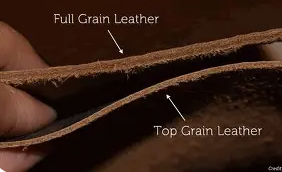
Genuine Leather – Despite the name, this sits near the bottom of the quality ladder. It’s real animal hide, but usually the split layers left over after the top grain is removed, then coated or embossed to look uniform.
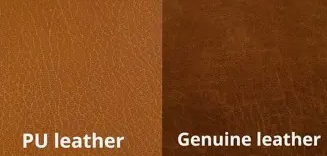
Bonded/PU Leather – Not leather at all, or only barely. Scraps of leather fiber glued together, or synthetic material made to mimic leather. Compare PU leather vs real leather side by side and you’ll spot the difference instantly.
Why These Terms Should Anchor Your Search
When you’re comparing products online or vetting a supplier, use these four terms as your filter. Vague phrases like “leather-look” or “leather-style” almost always signal synthetic material.
Here’s how to use them:
-
Search product listings using these exact terms. If a product page avoids specifying which grade of leather is used, that’s a red flag.
-
Cross-check listing images against the term used. Full grain leather should show visible pores, slight color variation, and natural markings, not a uniform, printed texture.
-
Compare price points against the claimed grade. A “full grain leather” bag priced like bonded leather is almost certainly mislabeled.
-
Ask suppliers directly which layer of the hide they’re using. For B2B buyers, this single question filters out a huge share of unreliable vendors before you even request samples.

A Quick Mental Checklist
Keep this hierarchy in mind every time you shop or source:
Full grain → most durable, most expensive, most authentic texture
Top grain → still genuine, smoother finish, slightly less rugged
Genuine leather → real material, but low grade and short lifespan
Bonded/PU → synthetic or reconstituted, lowest cost, lowest durability
Once these four terms are second nature, every other identification method becomes easier to apply. Grain texture identification, the smell test, the water drop test. You already know what you’re testing for and why it matters.
LSI Keywords
Search engines don’t just match exact phrases anymore. Google reads context, and that context comes from a cluster of related terms surrounding your main topic. For leather quality, that cluster includes words like grain texture, tanning process, patina, stitching, edge finish, and hardware quality. These aren’t synonyms for “quality leather”—they’re the vocabulary that surrounds it, the same way “insulation” and “down fill” surround “winter jacket” without meaning the same thing.
Understanding this vocabulary matters as much for buyers as it does for search rankings.
The Supporting Terms You’ll Need
Beyond full grain, top grain, genuine, and bonded leather, a handful of related concepts round out your identification toolkit:
-
Leather grain texture identification – the visible pattern on the surface, unique to each hide, and a dead giveaway when it’s too perfect or repeats in a pattern
-
Tanning process – vegetable-tanned leather ages into a rich patina; chrome-tanned leather stays more uniform but lacks that same depth over time
-
Patina development – the natural sheen and color change that builds with use, something synthetic materials cannot replicate
-
Leather craftsmanship quality signs – even stitching, reinforced stress points, clean edge finishing
-
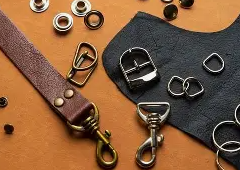
Leather hardware quality check – zippers, clasps, and rivets that match the grade of the leather itself
Each of these terms shows up naturally when you’re comparing products, reading reviews, or talking to a supplier. If a listing mentions “vegetable-tanned full grain leather with brass hardware,” you’re getting a much clearer picture than a vague “genuine Leather Bag, great quality.”
Why This Matters for Your Search
When you’re researching how to check leather authenticity, these related terms act as filters. A product description packed with specific, technical language (tanning method, grain pattern, hardware material) signals a seller who understands their product. A listing that avoids all of it, sticking to generic phrases like “premium leather” or “luxury finish,” often has something to hide.
Keep this expanded vocabulary in mind as you move through visual, tactile, and smell-based testing. It’ll help you ask sharper questions and read product listings the way an industry insider would.
Related Keywords
Type “how to identify quality leather” into any search bar, and watch what happens next. A dropdown list appears almost instantly, filled with phrases other shoppers have already typed before you. That dropdown isn’t random. It’s a snapshot of what real buyers actually want to know, and it’s one of the fastest ways to map out everything you should be researching before you buy—or before you sign off on a supplier’s sample batch.
What the Autocomplete List Is Really Telling You
Those suggested phrases cluster into a few clear categories, each pointing to a different stage of the buying journey:
-
Fraud-detection questions – “how to spot fake leather bags,” “how to check leather authenticity.” These come from buyers who’ve been burned before, or who’ve heard horror stories about mislabeled products.
-
Sensory-verification questions – “real leather smell test,” “leather grain texture identification.” These signal someone ready to physically inspect a product, not just read about it.
-
Educational questions – “leather bag material guide,” “full grain leather vs genuine leather.” These come from buyers still building their baseline knowledge.
-
Direct comparison questions – “PU leather vs real leather,” “top grain leather quality.” These signal someone actively choosing between two specific options, often mid-purchase.
None of these are vague. Each one reflects a specific worry or a specific stage of decision-making. That’s useful whether you’re a shopper trying to avoid a bad purchase or a buyer trying to anticipate questions your own customers will ask.
Long-Tail Questions Do the Heavy Lifting
Broad terms like “leather quality” get searched a lot, but they’re not where most buying decisions actually happen. The real decision-making happens around specific, narrow questions—things like “does real leather crack when bent” or “why does my Leather Bag smell like chemicals.” Individually, each search gets low volume. But together, these questions represent how people actually research a leather purchase.
That’s worth remembering as you build your own checklist. Don’t just learn the four grades of leather. Learn the sharp, specific questions—smell, bend test, hardware weight, stitching pattern—that separate a confident buyer from someone reading a glossy tag and hoping for the best.
motivation assessment
A seller’s motivation matters just as much as the material itself. Behind every “genuine leather, premium quality” listing is a business decision, and that decision usually falls into one of two categories: genuine craftsmanship or profit-driven shortcuts. Figuring out which category you’re dealing with is a separate skill from checking grain or smell, but it’s just as important for verifying leather authenticity.
Two Clue Types That Reveal Intent
Look at attribute clues and environmental clues together.
-
Attribute clues are about the seller themselves: their history, pricing consistency, and how they describe materials across their full catalog. A supplier who uses precise terms like “top grain” or “vegetable-tanned” consistently across dozens of products has less motivation to mislead you than one who switches between vague phrases product to product.
-
Environmental clues are about market pressure: how a seller behaves under competition. Steep, sudden discounts on “full grain leather” bags, especially from new or unverified sellers, often signal a motivation to move volume fast rather than build a reputation on real craftsmanship.

When both clue types point toward transparency, you’re likely looking at a seller with a genuine leather bag material guide worth trusting. When both point toward evasiveness, the motivation is almost certainly margin.
What to Watch For
-
Refusal to specify hide layer or tanning method often signals a motivation to obscure grade.
-
Inconsistent leather hardware quality across product photos: cheap zippers paired with claims of premium leather suggest cost-cutting motivation.
-
Unwillingness to provide close-up sample images is a strong signal the motivation is sales.
For B2B Buyers especially, this judgment call determines whether a supplier relationship is worth pursuing at all.
Recent Comments