
It has become difficult to differentiate wallet brands. Therefore, more companies are opening the market with the clear value of choosing lightweight leather for long wallet OEM products.
Looking at the data, about 68% of businessmen are dissatisfied with the “weight of their wallets.”
Lightweighting is not just a trend. These are the real needs of consumers. The advantage of choosing lightweight leather for long wallet OEM goes beyond just the product’s lightness. Manufacturing costs can be optimized. Delivery efficiency also improves. With a clear target audience, your sales strategy becomes stronger.
This article introduces the advantages of choosing a lightweight leather wallet through long wallet OEM for businesses considering OEM manufacturing.
Lightweight leather trends and demand background in the long wallet OEM market
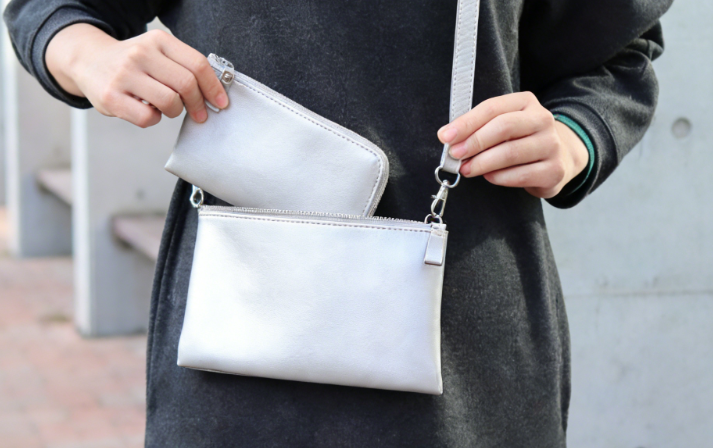
The global leather wallet OEM market will reach approximately 3.91 billion USD in 2024. It is expected to grow to 6.306 billion USD by 2034. The average annual growth rate remains at 5~6%.
The cashless era accelerates the demand for thin and lightweight devices
The expansion of the e-commerce market cannot be ignored. In 2017, the e-commerce market size for clothing and accessories was 1.65 trillion yen. This represents a year-on-year growth of +7.6%. The e-commerce adoption rate has exceeded 11%. Cashless payments are becoming widespread. Smartphone payments have also become part of everyday life. The need to carry large amounts of cash has decreased. There is a surge in demand for lightweight long wallets that can be completed with just a few cards and smartphones.
Benefit 1: Improved portability and differentiated user experience
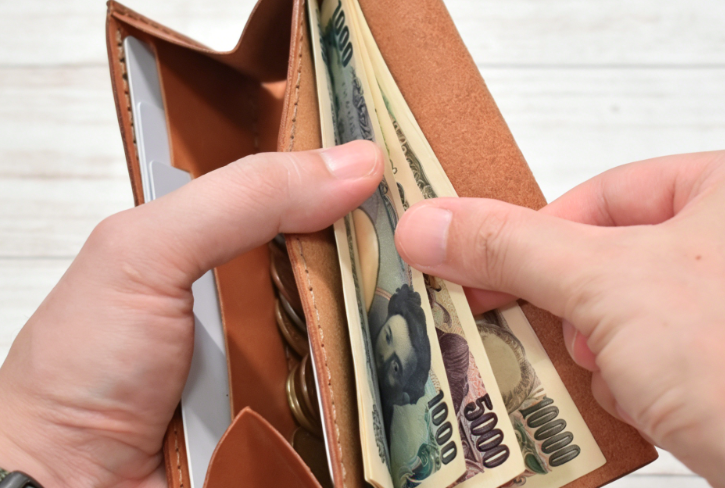
Choose lightweight leather for long wallet OEM use. This can specifically reduce product weight.
Weight Reduction Data by Material
A long wallet with the same design, but the leather material is changed. The following leather weight reduction is achieved.
Comparison of leather material density:
– Cowhide: 0.85–0.95 g/cm³
– Pigskin: 0.70–0.80 g/cm³ (about 10–25% lighter than cowhide)
– Goatskin: 0.75–0.85 g/cm³ (about 5–20% lighter than cowhide))
Assume a long wallet with many card pockets. This is the weight difference assuming the leather volume is about 120 cm³.
-
Cowhide: approximately 108 g
-
Pigskin: approximately 90 g (cowhide ratio −17%))
-
Goathide: approximately 96 g (cowhide ratio −11%))
We look at the finished product based on the hardware, including the hardware and zipper.
The typical weight of a long cowhide wallet is about 150 to 220 g. Switch only leather to lightweight materials:
-
Cowhide → pigskin: about 10–15% lighter (e.g., 180 g → 155–160 g)
-
Cowhide → goatskin: about 7–10% lighter (e.g., 180 g → 160–167 g)
Paired with a lightweight design. The effect is even more pronounced. Lightweight leather with a thickness reduced by 0.2 to 0.3 mm is used. It is also possible to reduce weight by about 20–30%. A 200 g wallet becomes 140–160 g.
Benefit 2: Freedom in concept design that leverages material characteristics
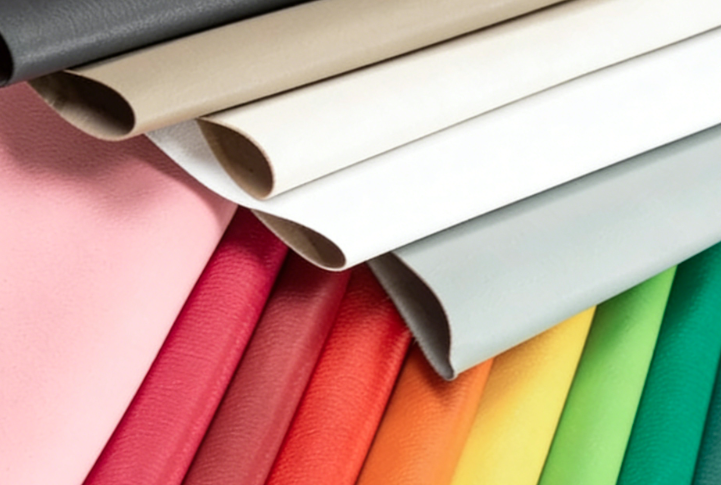
A lightweight long wallet is not just a “lightweight material.” Each piece of leather brings out the unique characteristics of each leather. Concept designs that could not be realized with conventional cowhide leather are now possible.
Pigskin: Story Design Featuring Breathability as a Weapon
The most distinctive feature of pigskin is its three-hole pattern. It has a three-layer structure where the pores penetrate the entire layer of the skin. It offers breathability that surpasses that of cowhide.
This is an example of a design that takes advantage of this characteristic.
The concept of “genuine leather insoles that resist stuffiness” is established. With a thickness of around 0.8mm, it achieves both lightweight and breathable performance.
It also excels in lightweight leather wallet design. We use pigskin about 0.6mm thick. Ideal for money clips and slim card cases. The lining material is limited to fabric + adhesive interfacing only. Even with almost no core material, strength can be maintained.
It also broadens the perspectives of branding. It can promote environmental protection as “sustainable leather” and “food-loss-derived leather.” Because it is leather born from a meat-eating culture.
Goat leather: Three-dimensional design that leverages flexibility
Goatskin has dense and fine fibers. It has high tear strength.
The same strength can be achieved with a thinner thickness. For clothing and gloves, the thickness is 0.5~1.0mm. For bags, it’s about 0.8~1.2mm.
Its bending flexibility surpasses that of cowhide leather of the same thickness. It makes it easier to design wallets with complex three-dimensional structures. It also reduces stress on the round zipper section.
The surface grain makes scratches less noticeable. It is advantageous for promoting durability for everyday use.
Advantage 3: Advantages in logistics and inventory management
Adopting lightweight leather changes the cost of making wallets. This directly affects transportation costs and inventory management expenses.
Weight reduction per unit effective through a weight-based pricing system
International shipping is charged by weight. Compare actual weight and volumetric weight. The larger one is eligible for billing.
The formula for calculating volumetric weight is as follows.
-
Airfreight: Volume (cm³) ÷5,000–6,000
-
Sea and international parcel delivery: Volume (m³) × 167kg
Let’s look at a concrete example.
Conventional leather bag cases:
– 1.0kg per piece → 0.7kg (▲0.3kg) for lightweight leather
– Shipment quantity: 2,000 pieces
Difference in total weight:
– Previous: 2,000kg
– Lightweight leather: 1,400kg (▲600kg)
International air shipping is priced at 600 yen/kg.
-
Previous: 2,000kg× 600 yen = 1,200,000 yen
-
Lightweight leather: 1,400kg×600 yen = 840,000 yen
-
Approximately 360,000 yen reduction per shipment (-30%)
The effectiveness is even greater in D2C cross-border e-commerce.
-
Monthly shipment: 10,000 units
-
0.2kg weight reduction per piece
-
Reduced weight: 2,000 kg/month
-
International parcel delivery unit price: 900 yen/kg
-
Monthly savings of 1,800,000 yen
Calculated on an annual scale.
-
Annual shipments of 200,000 units
-
1 piece ▲0.15kg
-
International shipping 800 yen/kg
-
Annual savings of 24,000,000 yen
Improved warehouse storage efficiency
Warehouse costs are determined by “price per tsubo × area” + “labor hours.”
Lightweight leather + slim design reduces storage volume. More items can be loaded in the same space than conventional products. Increases the number of items stored per tsubo. Improves rental efficiency.
Work efficiency is also improved. Lightweight items reduce physical strain during transport and picking. This leads to shorter work time.
Cost savings accumulate in both transportation and storage. This is the business advantage of lightweight leather.
Frequently Asked Questions (FAQ): Practical Questions about Lightweight Leather OEMs
Is lightweight leather less durable?
To get straight to the point, lightweight leather = not low durability.
About 80% of defect troubles are caused by factors other than the material. We focus on five processes: cutting, sewing, bonding, finishing, and inspection. This is a matter of process design and quality control.
Durability can be quantified. Please specify the usage environment conditions in advance. For example, specify in the inspection criteria that “after leaving for 24 hours at 80% humidity, adhesion strength will decrease by within 20%.”
Leather thickness is practically specified in the range of 1.2 to 1.5mm. This balances weight reduction with the required rigidity.
Machine conditions are crucial in sewing. For leather wallet sewing, we recommend speeds of 2000 revolutions or less per minute. This helps prevent needle temperature rise and thread breakage.
In the bonding and assembly process, peeling and warping are the main issues. Durability can be ensured through bonding conditions and crimping time management.
Conduct pilot production of 30–50 units before mass production. Strength and durability testing throughout the entire process significantly reduces defect rates during mass production.
Can you achieve a sense of luxury even with lightweight leather?
You can provide it. It is decided by finishing and inspection.
Factors that can affect the sense of luxury include “scratches, dirt, or color unevenness in the finishing process” and “inconsistent inspection standards.” Please create a clear standard document with NG photos. Comprehensive inspection stabilizes the appearance quality.
It is based on natural leathers such as cowhide and goatskin. You can choose specifications that reduce weight while maintaining texture.
The materials are a combination of cowhide (mainly Bangladeshi), goat leather, and polyester. You can adjust the grain, luster, and firmness by specifying the origin and leather type. You can design a “lightweight yet luxurious look and feel.”
What are the minimum lot sizes and initial costs?
Pilot production recommends 30 to 50 units. Necessary for identifying specifications and defect factors.
The production lot quantity is specified in units such as “◯ pieces per type” or “◯ pieces per color.” Lightweight leather changes in thickness and core material specifications. Please check in advance whether it is a “specification-specific lot” or “a full lot standardized.”
Initial costs include model costs, sample fees, and pilot production costs. Ask for a breakdown when providing an estimate. This creates room for negotiation.
Summary | Long wallet OEM strategy differentiated with lightweight leather
The advantage of choosing lightweight leather for long wallet OEM is not just about “lightness.” Portability improves, transforming the user experience. Logistics costs also decrease. It can also meet the needs of a segmented market. These three factors will give your brand a competitive edge.
Notably, the demand for OEM thin wallets and lightweight genuine leather wallets is increasing year by year. Consumers think, “I don’t want to compromise on quality. But I don’t want to carry a heavy wallet.” Lightweight leather is an option that meets this need.
Next step:
First, identify the type of lightweight leather that suits your target audience.
At sunteamOEM, we handle leather OEM orders starting from small lots. During the sample production stage, you can check the texture and durability of the materials. Are you struggling with planning a long wallet made from lightweight leather? Why not bring your vision to life with a free consultation?
Recent Comments